China Electric Motor Market to Soar: Key Insights for Global Buyers
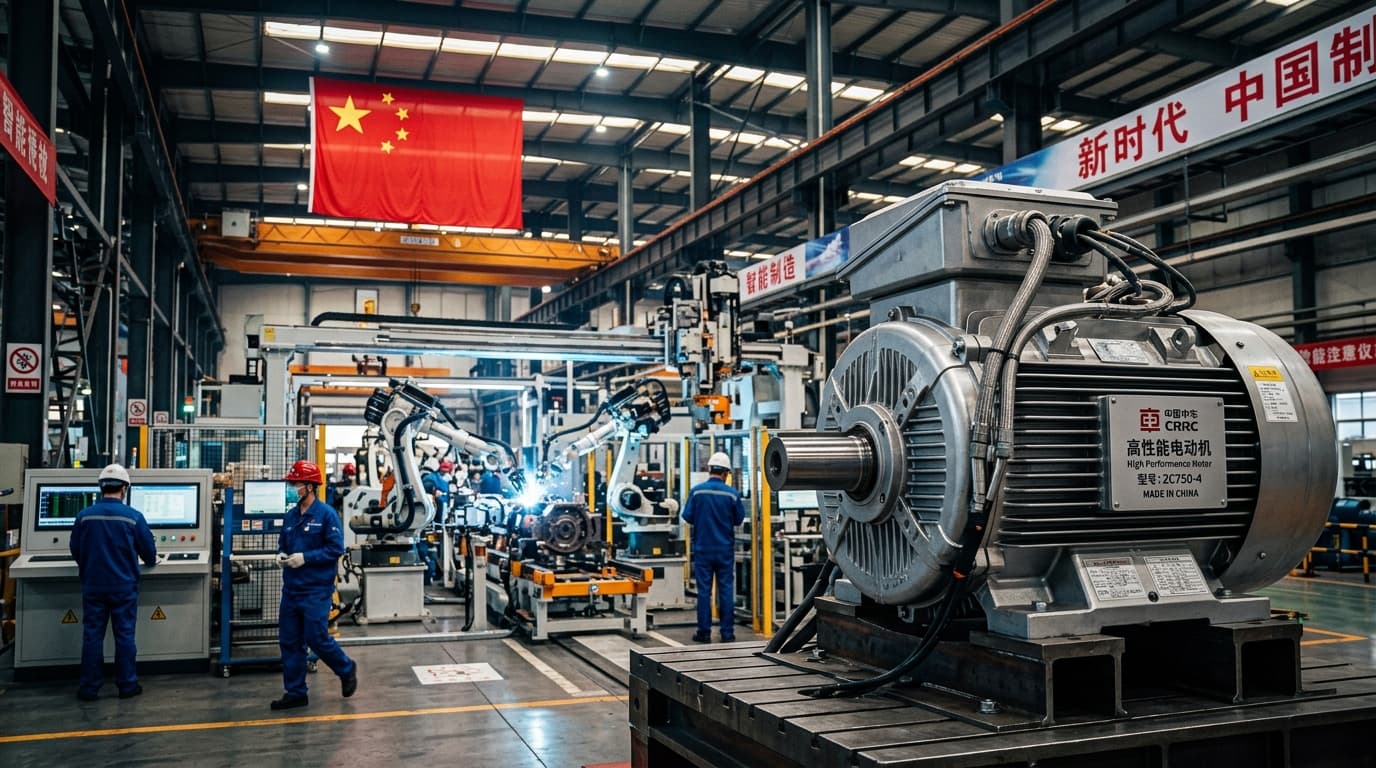
The global electric motor industry is undergoing a transformative shift, with China firmly at its epicenter. Far from being just a manufacturing hub, China's electric motor sector is a dynamic landscape driven by technological innovation, robust government support, and an insatiable domestic demand, particularly from the booming New Energy Vehicle (NEV) sector. For global B2B buyers, understanding these intricate dynamics is not just beneficial but essential for strategic sourcing and competitive advantage, whether you're sourcing high-quality products from Korea or navigating global supply chains.
Data from the 2025 China Electric Motor Manufacturing Industry Comprehensive Research Report reveals a staggering trajectory: the Chinese electric motor sales market is projected to reach approximately $46.96 billion in 2025. This robust growth is far from plateauing, with an anticipated Compound Annual Growth Rate (CAGR) of 10.8% from 2024 to 2030, propelling the market size to an impressive $78.59 billion by 2030 (Source: [1]). While AAMOND Global remains your premier partner for sourcing top-tier products from Korea, a keen awareness of major global markets like China provides invaluable context for any comprehensive sourcing strategy.
This report delves deep into the forces shaping this monumental growth, highlighting crucial trends, key players, and the opportunities awaiting savvy international buyers. From advanced motor technologies to the competitive landscape and regulatory environment, we equip you with the knowledge to make informed decisions. Ready to explore sourcing opportunities in this rapidly evolving market? Start your sourcing journey with AAMOND Global today!
I. China's Electric Motor Powerhouse: Unpacking Market Dynamics
Overall Market Growth
China's electric motor industry is not merely expanding; it's redefining global manufacturing benchmarks. The market, which generated a substantial $38.2439 billion in revenue in 2023 (Source: [1]), is on a steep upward curve. This growth is underpinned by rapid industrial automation, increasing energy efficiency demands, and the pervasive adoption of electric vehicles. The period between 2020 and 2025, although lacking a direct CAGR in the report, was characterized by significant recovery from the COVID-19 pandemic and the nascent, explosive growth of the NEV market. This suggests an even steeper growth curve during these years than the projected 10.8% CAGR for 2024-2030, as the market transitions from an initial high-growth phase to a more stable, albeit still rapid, expansion.
Understanding this growth trajectory is critical for B2B buyers looking for reliable suppliers and scalable solutions. As the market matures, the sheer volume of production and the continuous drive for innovation mean that Chinese manufacturers are consistently pushing the boundaries of cost-effectiveness and technological advancement. This environment presents unparalleled opportunities for global businesses to source high-quality components and finished products.
The NEV Revolution: A Dominant Force
Undoubtedly, the New Energy Vehicle (NEV) sector is the primary catalyst for China's electric motor market. The NEV powertrain market alone is expected to surge from $74.4 billion in 2025 to $174.0 billion by 2030, demonstrating an astounding CAGR of 18.2% (Source: [2]). This sub-segment's growth dramatically outpaces the overall market, signaling a robust demand for high-performance electric motors and related components.
The scale of NEV adoption in China is unparalleled globally. In the first half of 2025, NEV sales in China soared by 33% year-on-year to 5.46 million units, with NEVs achieving a 50.1% penetration rate in the passenger car market (Source: [3]). Furthermore, China's electric vehicle sales exceeded 11 million units in 2024, accounting for nearly two-thirds of global EV sales (Source: [4]). This level of penetration indicates that NEVs are no longer a niche but the mainstream of new car sales, profoundly influencing market sentiment and infrastructure development. The 'price compression' driven by expanding production capacity and falling battery costs (Source: [12]) further accelerates NEV adoption, creating massive economies of scale for motor manufacturers and reinforcing China's global leadership in EV components. For businesses seeking cutting-edge motor solutions for automotive applications, China's NEV market is an undeniable focal point.
II. Driving Forces and Key Technologies
Government Mandates & Innovation Push
China's strategic industrial policies are foundational to the electric motor sector's growth. The 'Made in China 2025' initiative, launched in 2015, aims to transform China into a global leader in advanced manufacturing, including robotics, semiconductors, and NEVs (Source: [9]). This policy specifically targets reducing reliance on foreign technology and fostering domestic innovation (Source: [9]), leading to significant advancements in industrial upgrading and smart manufacturing (Source: [8]). Such policies create a protected yet competitive environment, enabling Chinese manufacturers to innovate rapidly and scale production efficiently.
Beyond industrial policy, stringent environmental protection and energy efficiency mandates are shaping product development. The government explicitly targets enhancing the energy efficiency of electric motors (Source: [13]), promoting the production and use of high-efficiency models. Regulations demand higher efficiency classes such as IE3, IE4, and IE5 (Source: [14]), which has spurred substantial investment in R&D for advanced motor designs like Permanent Magnet Synchronous Motors (PMSM) and Brushless DC (BLDC) motors. The rapid progression of China's motor efficiency standards, making IE3 and IE4 mandatory in short order, underscores a proactive strategy for industrial upgrading and energy consumption reduction.
Technology Trends: Efficiency and Smart Control
The innovation landscape in China's electric motor industry is dynamic, focusing on several key areas:
- Energy Efficiency: Driven by government mandates and green manufacturing initiatives, manufacturers are focused on higher efficiency ratings (IE3, IE4, IE5) to reduce power consumption (Source: [14]). This translates to significant operational savings for buyers.
- Miniaturization and Lightweighting: Essential for NEVs and portable devices, there's a growing demand for compact, efficient motors.
- Intelligent Control Systems Integration: Motors are increasingly integrated with advanced control algorithms, sensors, and cloud-connected condition monitoring software to enhance precision, reliability, and enable predictive maintenance (Source: [21]). This aligns with China's 'Smart Manufacturing' drive (Source: [8]).
- Diverse Motor Technologies: The market is seeing simultaneous growth across various motor types tailored for specific applications:
- AC Motors: Dominating the overall market, accounting for 72.35% of China's electric motor sales revenue in 2023 (Source: [1]), induction AC motors are popular for their robustness and cost-effectiveness (Source: [10]).
- DC Motors: Anticipated to grow at a CAGR of 10.84% in China by 2030 (Source: [6]), with BLDC motors leading the segment (45.2% market share in 2024 for China DC motors) due to their efficiency and low maintenance (Source: [6]).
- PMSM: Preferred in NEVs for superior power-to-weight ratio, these are expected to grow at a 12.43% CAGR in the China DC motor market by 2030 (Source: [6]).
- SRM: Growing at a robust 8-10% CAGR until 2033 (Source: [21]), SRMs offer fault tolerance, simple structure, and low manufacturing costs, making them ideal for EVs and industrial automation. Notably, China accounts for over 60% of the global SRM market (Source: [21]).
For buyers, these technological advancements mean access to a diverse portfolio of high-performance, energy-efficient, and intelligently controlled motor solutions. If you need assistance with specific technical requirements, consider using AAMOND Global's RFQ service to connect with qualified suppliers.
III. Competitive Landscape and Strategic Sourcing
Domestic Giants vs. Global Players
The Chinese electric motor market is characterized by a dual competitive structure. The NEV segment, in particular, showcases a blend of dominant domestic players and a strong presence of international firms. Leading the charge among Chinese companies is BYD's FinDreams Powertrain, which held an impressive 27.5% market share in electric drive motors and 27.6% in motor controllers in Q1 2025 (Source: [23]). Other significant Chinese manufacturers include Wolong Electric Group (Source: [24]) and Inovance Technology (Source: [23]), alongside numerous specialized manufacturers.
Global powerhouses like ABB, Siemens, Nidec, Johnson Electric, and Regal Rexnord have established substantial footprints in China through local operations or joint ventures (Source: [31]). Even Tesla commands a significant share in China's electric drive motor and controller market, holding 6.0% in Q1 2025 (Source: [23]). This diverse competitive environment means buyers have a wide array of options, from large, vertically integrated Chinese corporations to specialized foreign entities with advanced technological offerings.
Navigating the Intense Price Competition
The NEV sector, especially, is defined by fierce price competition and rapid innovation (Source: [17]). This intense rivalry directly impacts motor manufacturers, driving down profit margins, particularly for automotive suppliers (Source: [17]). To stay competitive, motor manufacturers are compelled to aggressively optimize costs through extreme economies of scale, vertical integration, and continuous process innovation. Companies unable to keep pace with cost reduction and rapid development cycles face the risk of being marginalized.
For B2B buyers, this competitive pressure can translate into favorable pricing for high-quality motors. However, it also necessitates a thorough understanding of supplier capabilities, R&D investments, and long-term viability. Strategic partnerships and a focus on value rather than just cost become paramount. This requires meticulous sourcing practices and potentially leveraging tools like an MOQ Profitability Calculator to assess true value.
Mini-Story 1: The Integrated Advantage of 'Dragon Motors'
Consider 'Dragon Motors,' a fictional Chinese NEV manufacturer (inspired by BYD's strategies). Facing intense market competition and pressure for rapid innovation, Dragon Motors embarked on a bold strategy of vertical integration. Instead of relying solely on external suppliers, they invested heavily in developing and manufacturing their own electric drive motors and battery packs. This allowed them to control the entire supply chain, from raw materials to the final vehicle assembly. The result? Dragon Motors significantly reduced per-unit costs by 30%, slashed development cycles by 40-50% (Source: [17]), and achieved unparalleled quality control. This enabled them to launch new EV models twice as fast as competitors, securing a dominant market share in China and rapidly expanding into international markets, showcasing the power of integrated manufacturing in a high-stakes industry.
IV. Critical Applications and Sectoral Growth
Beyond NEVs, Chinese electric motors serve a multitude of industries, each with unique growth drivers.
Industrial Automation & Robotics
The industrial automation sector in China is growing at an annual rate of 7% (Source: [7]), fueling significant demand for electric motors that are integral to robotic arms and Automated Guided Vehicles (AGVs). China's 'smart manufacturing' (Source: [8]) and industrial upgrading initiatives further boost this demand. Motors designed for precision control, high efficiency, and durability are crucial for these applications.
The robotics and AGV segments within the Chinese DC motor market are experiencing a 15.61% CAGR (Source: [6]). This growth is driven by rising labor costs and the increasing need for high-precision, low-maintenance drives in manufacturing. Buyers in the industrial automation space can find advanced motor solutions tailored for robotics, CNC machines, and other automated systems.
HVAC and Consumer Appliances
The rapid urbanization in China and India is a major catalyst for electric motor demand in diverse applications, including HVAC equipment and home appliances (Source: [7]). The HVAC equipment market alone is projected to grow with a 7.3% CAGR and an estimated 15% annual increase (Source: [7]). This segment requires cost-effective, small, and efficient motors.
Small-sized and fractional horsepower (FHP) motors are particularly prevalent in consumer appliances. Globally, FHP motors accounted for 84.9% of the AC motor market in 2023 (Source: [10]), while motors under 1kW made up 48.7% of the Chinese DC motor market in 2024 (Source: [6]). The emphasis on miniaturization and energy efficiency in home appliances continues to drive innovation in these motor types, making China a key sourcing destination for manufacturers of white goods and other consumer electronics. Utilize an Export Regulation Checker to ensure compliance when importing from China.
Mini-Story 2: 'Tech Innovations Inc.' Boosts Efficiency with Chinese Motors
'Tech Innovations Inc.,' a leading European industrial automation firm, was developing a new generation of robotic assembly lines. Their challenge was to find highly efficient AC motors that could meet strict new EU energy regulations while also reducing operational costs for their clients. After extensive research, they discovered a specialized Chinese manufacturer (e.g., from Zhejiang Ligong Motor Co., Ltd.) that offered IE4-compliant AC motors at a competitive price point, backed by robust quality certifications. By integrating these motors, Tech Innovations Inc. not only achieved significant energy savings—up to 15% (Source: [7] for related HVAC data, implying similar for industrial motors)—but also delivered a superior, more sustainable product to their customers, enhancing their market position. This strategic sourcing decision, facilitated by access to AAMOND Global's network, allowed them to leverage Chinese manufacturing capabilities for global innovation.
V. Future Outlook: Opportunities and Challenges
The Chinese electric motor industry is poised for continued expansion, but not without evolving dynamics and challenges.
Market Integration & Specialization
The intense competition and price wars, particularly in the NEV sector, are expected to lead to significant consolidation among both vehicle manufacturers and component suppliers (Source: [17]). This could result in a market dominated by a few large, vertically integrated corporations, alongside highly specialized niche manufacturers. For buyers, this means identifying reliable partners that either offer comprehensive, cost-efficient solutions through integration (like BYD) or possess deep expertise in specific, advanced motor technologies (like SRM or high-precision PMSM).
As the market segments and professionalizes, manufacturers will need to diversify their motor portfolios or specialize deeply in specific motor types and target applications. This shift encourages innovation across various motor technologies, with PMSM and BLDC dominating high-performance EV traction, while SRMs offer a robust, cost-effective alternative with ongoing R&D in control algorithms.
Geopolitical Factors and Supply Chain Resilience
Global protectionist measures, such as EU tariffs on Chinese EVs (Source: [18]) and US tariffs (Source: [18]), coupled with China's own data security laws (Source: [18]), are promoting supply chain regionalization. This dynamic can impact foreign investment and technology transfer, making it complex for companies to ensure market access and supply chain resilience. Buyers must navigate these complexities, potentially leading to a bifurcated global market or forcing companies to choose sides (Source: [18]).
For global sourcing, this implies a need for diverse supply chain strategies, potentially including multi-country sourcing or deeper engagement with local partners. Understanding the regulatory environment and potential trade barriers is crucial. AAMOND Global can help you find reliable suppliers and navigate these geopolitical challenges, ensuring your supply chain remains robust. Use our Shipping Time Estimator to plan logistics more effectively under various scenarios.
Mini-Story 3: 'VoltDrive Solutions' Pioneers with SRM Technology
'VoltDrive Solutions,' an ambitious EV startup specializing in sustainable last-mile delivery vehicles, faced a critical challenge: the high cost and volatile supply of permanent magnets for their conventional PMSM motors. They needed a robust, cost-efficient, and magnet-free alternative. Through diligent research and networking, they discovered a prominent Chinese partner who was at the forefront of Switched Reluctance Motor (SRM) technology. Given China's leading position, accounting for over 60% of the global SRM market (Source: [21]), this partnership was a game-changer. VoltDrive Solutions leveraged their partner's expertise in SRM manufacturing and control algorithms. The result was a new line of delivery EVs equipped with highly durable, cost-effective SRMs, significantly reducing their material costs and supply chain risks. This strategic collaboration not only accelerated their product launch but also positioned them as innovators in sustainable EV powertrains.
Conclusion
The Chinese electric motor manufacturing industry is a global powerhouse, driven by strategic national policies, explosive growth in the NEV sector, and relentless technological advancement. It's a market characterized by significant growth, a dynamic competitive environment, and continuous innovation in energy efficiency and intelligent integration. While domestic leaders, empowered by vertical integration and government support, strengthen their dominance, international players continue to seek opportunities through technological leadership and strategic partnerships.
Key Takeaways:
- The Chinese electric motor market is projected to reach $78.59 billion by 2030, with NEV powertrains growing at an exceptional 18.2% CAGR.
- Government policies like 'Made in China 2025' and stringent efficiency standards (IE3, IE4, IE5) are driving innovation and fostering domestic leadership.
- Technological trends emphasize high efficiency (PMSM, BLDC, SRM), miniaturization, and intelligent control systems.
- The market is highly competitive, especially in the NEV sector, necessitating cost optimization, vertical integration, and rapid innovation from manufacturers.
- Geopolitical factors and data security policies are leading to supply chain regionalization, requiring diverse and resilient sourcing strategies.
Next Steps for Buyers:
For B2B buyers seeking to navigate this complex yet opportunity-rich market, success hinges on embracing high-efficiency and intelligent motor technologies, adapting to fierce price competition through cost optimization and vertical integration, and deftly managing geopolitical dynamics in supply chain strategies. Understanding the trajectory of this industry is crucial for setting global standards and driving innovation in electric motor technology and manufacturing across various applications.
Whether you are looking to source advanced electric motors, components, or other industrial goods, AAMOND Global is your trusted partner. We connect you with verified suppliers and provide the insights needed to make informed decisions. Submit Your RFQ today and let us help you find the perfect sourcing solution.
Q. What is the projected size of the China electric motor market by 2030?
A. The China electric motor sales market is projected to reach approximately $78.59 billion by 2030, growing at a Compound Annual Growth Rate (CAGR) of 10.8% from 2024 (Source: [1]).
Q. How rapidly is the NEV powertrain market growing in China?
A. The China NEV powertrain market is expected to grow from $74.4 billion in 2025 to $174.0 billion by 2030, representing a significant Compound Annual Growth Rate (CAGR) of 18.2% (Source: [2]).
Q. What role do government policies play in the Chinese electric motor industry?
A. Government policies such as 'Made in China 2025' and mandates for high energy efficiency (IE3, IE4, IE5 standards) are crucial. They foster domestic innovation, reduce reliance on foreign technology, and drive demand for advanced motor designs like PMSM and BLDC (Source: [9], [14]).
Q. Which motor technologies are dominant or rapidly growing in China?
A. AC motors currently dominate with 72.35% of China's sales revenue in 2023. However, BLDC motors lead the DC motor segment (45.2% share in 2024), PMSM are highly favored in NEVs, and Switched Reluctance Motors (SRMs) are rapidly growing with China holding over 60% of the global SRM market (Source: [1], [6], [21]).
Q. How does competition affect sourcing from China's electric motor market?
A. Intense price competition, especially in the NEV sector, compels manufacturers to optimize costs through economies of scale and vertical integration. This can lead to competitive pricing for buyers but also requires careful evaluation of supplier long-term viability and R&D capabilities (Source: [17]).
Related Articles
Popular Articles
Want to learn more about our overseas sales services?
Get a free consultation from AAMOND Global experts.