Japan's Electric Motor Market: Is the $20 Billion Opportunity Open for Korean Suppliers?
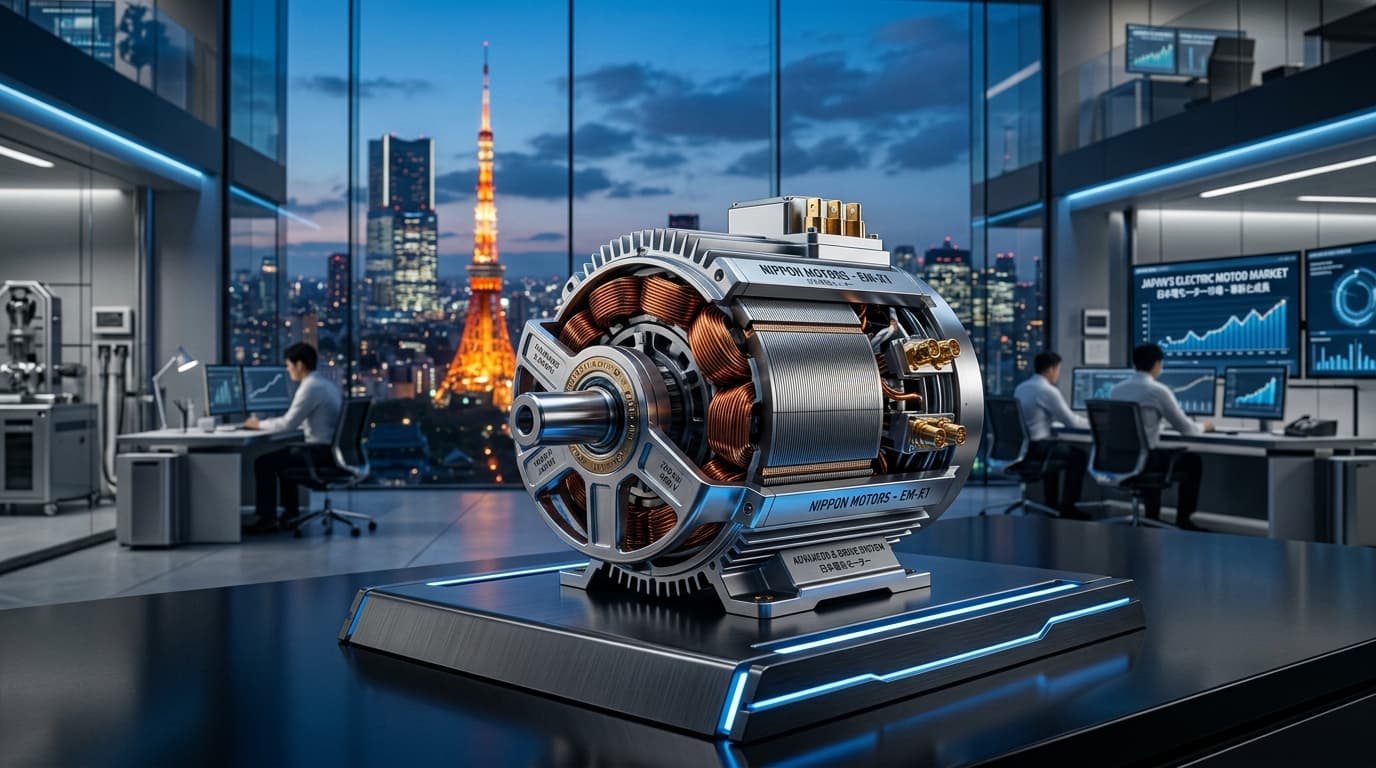
Japan's electric motor market is a powerhouse of innovation and growth, with a staggering projection to reach $20 billion by 2035, growing at a robust 7.529% CAGR from 2025-2035. This formidable expansion is driven by a confluence of factors: a national imperative for energy efficiency and sustainability, rapid advancements in industrial automation and robotics, and the transformative shift towards electric vehicles (EVs). For overseas B2B buyers, particularly those looking to source advanced components, understanding this dynamic landscape is crucial. But for Korean suppliers, this market represents a unique and complex opportunity, demanding nuanced strategies to capitalize on Japan's specialized demands.
While Japan continues its impressive trajectory, the market exhibits unique characteristics that demand a tailored approach. Korean manufacturers, renowned for their technological prowess and competitive edge, are ideally positioned to meet these evolving needs. This report delves into the intricate details of the Japanese electric motor market, highlighting key growth segments, technological trends, major players, and providing actionable insights for Korean businesses to successfully navigate and penetrate this high-value sector. Dive deeper into these opportunities and discover how Korean products can meet Japan's advanced demands.
Decoding the Growth: Japan's Electric Motor Market Poised for $20 Billion by 2035
The Japanese electric motor market is experiencing robust and sustained growth, underpinned by strong demand for energy efficiency and sustainability, alongside the rapid evolution of industrial automation and robotics. According to recent analyses, the market, valued at $8.52 billion in 2023, is expected to hit $9 billion in 2024. This growth is anticipated to continue at an impressive 7.529% CAGR from 2025 to 2035, culminating in a market size of $20 billion by 2035. This signifies the critical role electric motors play across diverse industrial sectors, ensuring a continuous surge in demand.
Digging into sub-segments, the low-voltage electric motor market alone is projected to grow from $904.9 million in 2024 to $1.3104 billion by 2033, demonstrating a 4.2% CAGR from 2025-2033. Another report estimates similar growth, from $899.7 million in 2024 to $1.4004 billion by 2035, with a 4.1% CAGR from 2025-2035. High-value and high-performance motor technologies, such as precision motors, BLDC motors, and servo motors, are particularly driving this market expansion. The emphasis on energy efficiency, coupled with strict government regulations like the Environment Ministry's goal to improve overall industrial energy efficiency by 20% by 2030, fuels the demand for high-performance, low-power consumption motors. This sustained growth across various segments underscores Japan's commitment to advanced manufacturing and sustainable technologies.
Beyond BEVs: Navigating Japan's Unique Electric Vehicle & HEV Motor Landscape
While the electric vehicle (EV) sector is a significant growth driver globally, Japan presents a nuanced picture, especially regarding its domestic battery electric vehicle (BEV) market. The broader Japanese EV market is projected for substantial growth, expanding from $32.19 billion in 2024 to $132.79 billion by 2032, at a remarkable 19.38% CAGR from 2025-2032. However, domestic BEV sales saw a temporary dip, decreasing by 33% in 2024 to 59,736 units, marking the first decline in four years and maintaining a market share of less than 2%.
This seemingly contradictory trend highlights a crucial market dynamic: Japan's electric motor market growth isn't solely dependent on domestic BEV sales. A significant factor is the strong preference for Hybrid Electric Vehicles (HEVs), which commanded an overwhelming 85% share of Japan's EV market in 2024. HEVs, by their nature, also extensively utilize electric motors, and their robust domestic sales significantly contribute to the overall 'electric motor' and 'EV' market growth figures. Furthermore, Japanese motor manufacturers are major global suppliers to automotive OEMs worldwide, producing motors for EVs (including BEVs and HEVs) destined for international markets with higher BEV adoption rates. This means Korean suppliers targeting the Japanese automotive motor market must consider a subtle strategy: focusing on high-efficiency motors and related components for HEVs, or positioning themselves as reliable and technologically advanced suppliers for Japanese automotive OEMs' global EV production lines, irrespective of the specific propulsion type (BEV or HEV). Understanding the specific technological requirements and procurement strategies of major Japanese automotive companies and their global supply chains is paramount for success.
Technological Prowess: Emerging Trends Driving Japan's Electric Motor Innovation
Japan's electric motor market is characterized by dynamic innovation, with several key technologies driving its evolution. The demand for Brushless DC (BLDC) motors is particularly strong, with anticipated shipment growth of 102.3% in 2024 and 104.8% in 2025. This growth is primarily fueled by advancements in industrial automation, robotics, and increasing demands for high efficiency across various applications. The Japanese BLDC motor market is projected to reach $3.1515 billion by 2030, exhibiting a strong 8.1% CAGR from 2025-2030. Notably, motors with power output below 750 watts generated the most revenue in 2023, reflecting a focus on compact, high-efficiency solutions.
Servo motors also show robust growth, with the global market expected to grow by 107.8% in 2024 and 108.0% in 2025. While China is the largest servo motor market globally, Japanese companies like FANUC and Mitsubishi Electric remain leaders in high-precision industrial applications. Stepping motors, including variable reluctance types, are projected to grow at a 6.1% CAGR from 2025-2035, driven by expanding manufacturing activities and applications in medical and robotics. Furthermore, Japan maintains global leadership in micro-precision motors, a segment expected to grow at a 7.00% CAGR from 2025-2035.
Mini-Story 1: A Korean BLDC Supplier's Breakthrough in Robotics
"In the fiercely competitive Japanese robotics sector, 'TechMotor Korea' faced a challenge: how to differentiate its high-performance BLDC motors against established local giants. Recognizing Japan's specific demand for compact, high-efficiency motors under 750W for advanced robot joints, TechMotor invested heavily in miniaturization and optimized control algorithms. Their breakthrough came when a Japanese startup, 'RoboMotion,' developing a new line of collaborative robots, sought a partner for precision motors. TechMotor's solution, offering 20% higher power density and 15% better efficiency than competitors, secured the contract. By understanding RoboMotion's need for a seamlessly integrated, ultra-compact motor solution, TechMotor not only provided a superior product but also integrated their motor with RoboMotion's proprietary control software, positioning themselves as a crucial technology partner rather than just a component supplier. This strategic alignment propelled TechMotor's presence in the Japanese industrial automation market, showcasing the immense potential for specialized Korean expertise."
Emerging technologies include in-wheel motors for EVs, despite ongoing R&D challenges related to cost and durability. Companies like PTG are developing high-torque in-wheel motors, and BMW is pushing for mass production. For robotics, startups like Keigan are developing compact, high-output motors for industrial robot joints, integrating advanced features like angle and acceleration sensors directly into the motor unit. The global push for energy efficiency is also evident in the adoption of IE4, IE5, and IE6 standards. Japan is actively reviewing the implementation of IE4 for small-capacity motors by 2030, with significant progress made in IE5-compliant reluctance motors and the emergence of IE6 'ultra-high efficiency' motors. These initiatives are strongly driven by stringent energy efficiency regulations and broader sustainability goals. Korean suppliers must ensure their products meet or exceed these standards; AAMOND Global can help navigate complex export regulations and certifications.
Japan's Electric Motor Giants: A Look at Leading Manufacturers and Their Strategies
The Japanese electric motor market is dominated by a few major players who hold significant market share and exert strong influence. These giants leverage technological leadership, comprehensive integrated solutions, and strategic growth through M&A. Key players include:
- Nidec Corporation: A dominant force with a significant 31.7% share of the overall Japanese motor market. Nidec is a global leader in precision motors, boasting an overwhelming 80% global market share in HDD spindle motors and 75% in BLDC motors for HDDs. Their diverse portfolio spans small precision motors (HDDs, fans, haptic devices), automotive products (EPS, traction motors, ADAS sensors), home appliances, industrial motors, and machinery. Nidec's strategy emphasizes technology leadership, M&A-driven growth, and maximizing cost reduction and PMI optimization.
- Mabuchi Motor: A specialist in DC motors, holding a 60% global market share in this segment. Mabuchi is strategically evolving beyond simple motor sales to offer comprehensive 'motion' solutions and unit products, integrating motors with peripheral components. Their focus areas include mobility, machinery, and medical applications.
- Mitsubishi Electric: A major conglomerate with a strong presence in industrial automation and power electronics. They are strategically enhancing their business in EV motors and inverters. Their broad business units cover public systems, energy, factory automation, automotive equipment, building systems, HVAC, home appliances, information systems, and semiconductors.
- Yaskawa Electric Corporation: Recognized as one of the 'Big 4' in the global industrial robot sector, Yaskawa manufactures servo motors, AC drives/inverters, and industrial robots (Motoman). Their core business segments include motion control (for high-precision applications like semiconductors), robotics (for welding, painting, assembly, and transport in automotive), and system engineering. Yaskawa plans to double its domestic production of industrial robot components to reduce reliance on Chinese parts.
Mini-Story 2: A Korean AI-Powered Motor's Niche in Japanese Automation
"'SmartDrive Korea,' a Korean innovator, developed an AI-powered servo motor with predictive maintenance capabilities, capable of detecting minute anomalies up to three months in advance. While Japanese giants like FANUC and Mitsubishi Electric dominated the traditional servo market, SmartDrive identified a gap in high-precision factory automation lines where downtime was exceedingly costly. They approached 'Precision Robotics Japan,' a Tier-1 system integrator for semiconductor manufacturing equipment, which was struggling with unpredictable motor failures. SmartDrive's solution, offering both superior precision and an integrated IoT platform, allowed Precision Robotics Japan to reduce maintenance costs by 18% and increase uptime by 12%. By emphasizing the TCO benefits and smart features, SmartDrive Korea carved out a niche, proving that advanced, intelligent solutions could compete effectively against established players, even if their market share wasn't explicitly stated, as quality and advanced features were prioritized. Korean firms can learn more about these market dynamics through More Trade Insights."
Strategic Blueprint for Korean Suppliers: Capturing Opportunities in Japan's Electric Motor Sector
For Korean companies eyeing the Japanese electric motor market, a nuanced and strategic approach is vital. The market is highly concentrated, with a few major players dominating, and it rewards technological superiority and specialized solutions over price-based competition in standardized segments.
- Target High-Value, Precision Niches: The Japanese market is competitive in standardized or commoditized motor segments. Korean companies should leverage their strengths to secure a technological edge in areas requiring high precision, compact size, high power density, and extreme efficiency (IE4, IE5, IE6 standards). Targeting niche markets like medical devices or advanced robotic joints, which demand high precision and reliability, can be particularly effective.
- Emphasize Energy Efficiency and Smart Features: Energy efficiency is not just a feature but a mandatory requirement in the Japanese market, driven by stringent government regulations and sustainability initiatives. Korean firms must clearly demonstrate that their motors meet or exceed Japanese and international energy efficiency standards and highlight the resultant Total Cost of Ownership (TCO) savings. Additionally, emphasizing 'smart' features like IoT integration, real-time monitoring, and predictive maintenance capabilities, showcasing how their motors contribute to the intelligence of the final system, is crucial.
- Adopt an Integrated Solution and System Perspective: Japanese manufacturers are evolving from simple component suppliers to 'integrated manufacturers.' Korean companies should develop integrated solutions (motor + controller + sensors + software) rather than focusing solely on individual motor sales. Collaborating closely with Japanese system integrators or Tier-1 suppliers to create value within larger systems is a potent strategy. This might involve concentrating on specific sub-systems where Korean motor technology offers unique performance or efficiency advantages. Evaluating MOQ Profitability Calculator can further aid in tailoring offerings.
Mini-Story 3: A Korean EV Motor Supplier's HEV Niche Success
"Facing the challenge of declining BEV sales in Japan, 'EcoDrive Solutions,' a Korean EV motor supplier, pivoted its strategy. Instead of focusing solely on BEVs, they identified Japan's strong and sustained preference for HEVs. EcoDrive developed a new line of high-efficiency, compact BLDC motors specifically optimized for HEV drivetrains, which required precise power delivery and heat management in a smaller footprint. They secured a partnership with a prominent Japanese Tier-1 automotive supplier, 'Global Auto Components,' which provided HEV systems to multiple Japanese OEMs. By showcasing their motors' superior efficiency (5% better than existing solutions) and reliability in rigorous HEV specific tests, EcoDrive positioned itself as a trusted, technologically advanced supplier for Global Auto Components' HEV production lines, both domestically and for export. This strategic move allowed EcoDrive to tap into a robust segment of the Japanese automotive market and expand its global presence, demonstrating how understanding nuanced market preferences and offering tailored solutions can lead to significant success."
4. Enter Japanese Automotive OEM Global Supply Chains: Despite domestic BEV sales stagnation, Japanese automotive companies maintain strong positions in the HEV market and are actively producing and exporting for global EV markets. Korean companies should consider targeting the motor demand for domestic HEV markets or positioning themselves as reliable suppliers for Japanese automotive OEMs' global EV production lines (including both BEV and HEV components). This necessitates a deep understanding of the specific technical requirements and procurement strategies of major Japanese automotive companies and their global supply chains.
5. Leverage Supply Chain Resilience Trends: Growing geopolitical tensions and supply chain vulnerabilities are compelling Japanese companies to diversify their sourcing and increase local production. This trend creates new opportunities for Korean firms. By demonstrating capabilities as alternative suppliers offering high-quality, reliable, and secure supply chains, Korean companies can align with Japanese manufacturers' evolving procurement strategies. The focus is shifting beyond mere cost-competitiveness to resilience, quality, and geopolitical alignment, a trend that Korean suppliers can effectively utilize.
Conclusion
As of August 3, 2025, the Japanese electric motor market is on a robust growth trajectory, a trend expected to persist into the future. This expansion is predominantly fueled by a strong national commitment to energy efficiency and sustainability, the rapid evolution of industrial automation and robotics, and the overarching transition to electric vehicles. Innovation is thriving, particularly in high-performance and high-value technology segments such as Brushless DC (BLDC) motors, servo motors, and micro-precision motors.
The unique characteristic of the Japanese market lies in its nuanced EV landscape: while domestic Battery Electric Vehicle (BEV) sales experienced a temporary dip, the overall electric motor market and the broader EV market (including hybrids) continue to grow steadily. This growth is largely due to Japanese motor manufacturers' significant contribution to export production as key suppliers to global automotive OEMs, coupled with the dominant share of Hybrid Electric Vehicles (HEVs) in the domestic market, which also drives motor demand.
Key Takeaways for Korean Suppliers:
- The Japanese electric motor market is projected to reach $20 billion by 2035, driven by sustainability, automation, and EV shifts.
- Domestic BEV sales saw a temporary decline, but HEVs dominate the Japanese EV market, creating strong demand for HEV-specific motors.
- Key technological trends include high-efficiency BLDC, servo, and precision motors, with growing interest in IoT integration.
- Leading Japanese manufacturers like Nidec, Yaskawa, and Mitsubishi Electric prioritize technological leadership and integrated solutions.
- Korean companies must offer high-value, integrated, and energy-efficient solutions, targeting specific niches and global supply chains of Japanese OEMs.
Next Steps for B2B Buyers:
Understanding these market dynamics is crucial for any B2B buyer or supplier. Korean manufacturers are well-positioned to meet Japan's demand for advanced, high-performance electric motors, offering competitive advantages in precision, efficiency, and integrated solutions. Ready to explore premium Korean electric motors that align with Japan's future? Submit Your RFQ today and let AAMOND Global connect you with the ideal partners, simplifying your sourcing journey and ensuring access to cutting-edge technology.
FAQ
Q. What is the projected growth of the Japanese electric motor market?
A. The Japanese electric motor market is expected to grow from $9 billion in 2024 to $20 billion by 2035, at a robust 7.529% Compound Annual Growth Rate (CAGR) from 2025-2035.
Q. What are the key drivers for electric motor demand in Japan?
A. Key drivers include a strong national emphasis on energy efficiency and sustainability, rapid advancements in industrial automation and robotics, and the overall transition towards electric vehicles (EVs).
Q. How do HEVs impact the Japanese EV motor market?
A. Hybrid Electric Vehicles (HEVs) hold an overwhelming 85% share of Japan's domestic EV market as of 2024. This strong preference for HEVs significantly drives demand for electric motors, contributing to the overall market growth despite a temporary dip in domestic Battery Electric Vehicle (BEV) sales.
Q. Which electric motor technologies are trending in Japan?
A. Trending technologies include Brushless DC (BLDC) motors (especially under 750W), servo motors, stepping motors, micro-precision motors, high-efficiency motors (IE4, IE5, IE6 standards), and smart/IoT integrated motors.
Q. What strategic advice is given for Korean suppliers entering the Japanese market?
A. Korean suppliers should focus on high-value, precision niches, emphasize energy efficiency and smart features, offer integrated solutions (motor + controller + software), target Japanese automotive OEMs' global supply chains (for HEV/BEV components), and leverage the trend of strengthening supply chain resilience.
Related Articles

Popular Articles


Want to learn more about our overseas sales services?
Get a free consultation from AAMOND Global experts.